
Climate Change
The Impact of Global Warming on Weather Patterns
It's Cold and My Car is Buried in Snow
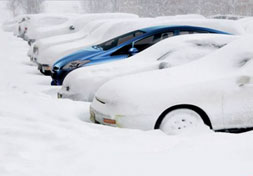 For years, climate contrarians have pointed to snowfall and cold weather to question the scientific reality of human-induced climate change.
Their annual barrage of misinformation obscures the interesting work scientists are doing to figure out just how climate change is affecting weather patterns year-round.
Understanding what scientists know about these effects can help us adapt. And, if we reduce the emissions that are driving climate change, we can avert its worst consequences in the future.
What is the Relationship Between Weather and Climate?
Weather is what's happening outside the door right now; today a snowstorm or a thunderstorm is approaching. Climate, on the other hand, is the pattern of weather measured over decades.
NASA and NOAA plus research centers around the world track the global average temperature, and all conclude that Earth is warming. In fact, the past decade has been found to be the hottest since scientists started recording reliable data in the 1880s. These rising temperatures are caused primarily by an increase of heat-trapping emissions in the atmosphere created when we burn coal, oil, and gas to generate electricity, drive our cars, and fuel our businesses. Hotter air around the globe causes more water evaporation, which fuels heavier precipitation in the form of more intense rain and snow storms.
At the same time, because less of a region's precipitation is falling in light storms and more of it in heavy storms, the risks of drought and wildfire are also greater. Ironically, higher air temperatures tend to produce intense drought periods punctuated by heavy floods, often in the same region.
But We Still Have Cold Winter Weather
The seasons we experience are a result of the Earth's tilted axis as it revolves around the Sun. During the North American winter, our hemisphere is tilted away from the Sun and its light hits us at a different angle, making temperatures lower.
While climate change won't have any impact on Earth's tilt, it is significantly shifting temperatures and causing spring weather to arrive earlier than it used to. Overall, spring weather arrives 10 days earlier than it used to, on average. "Spring creep" is something scientists projected would happen as the globe continues to warm.
Hurricanes and Climate Change
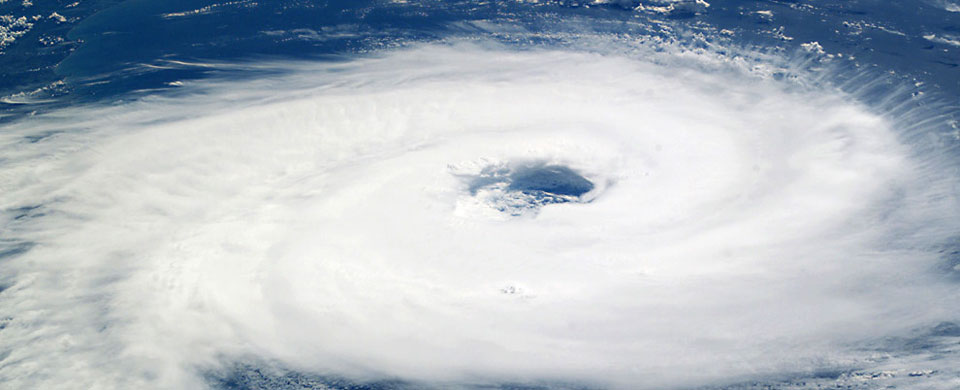
Whether the characteristics of tropical hurricanes have changed or will change in a warming climate ? and if so, how ? has been the subject of considerable investigation, often with conflicting results. Large amplitude fluctuations in the frequency and intensity of tropical hurricanes greatly complicate both the detection of long-term trends and their attribution to rising levels of atmospheric greenhouse gases. Trend detection is further impeded by substantial limitations in the availability and quality of global historical records of tropical hurricanes. Therefore, it remains uncertain whether past changes in tropical hurricane activity have exceeded the variability expected from natural causes. However, future projections based on theory and high-resolution dynamical models consistently indicate that greenhouse warming will cause the globally averaged intensity of tropical hurricanes to shift towards stronger storms, with intensity increases of 2?11% by 2100. Existing modelling studies also consistently project decreases in the globally averaged frequency of tropical hurricanes, by 6?34%. Balanced against this, higher resolution modelling studies typically project substantial increases in the frequency of the most intense hurricanes, and increases of the order of 20% in the precipitation rate within 100 km of the storm centre. For all hurricane parameters, projected changes for individual basins show large variations between different modelling studies.