

Climate Change
Global Warming and Energy Consumption
It's About Energy
Energy is at the heart of the global warming challenge. It is humanity's production and use of energy that is the primary cause of global warming, and in turn climate change will eventually affect our production and use of energy. Energy consumption soared by more than 5% in 2010, after the slight decrease of 2009. This strong increase is the result of two converging trends. One - Industrialized countries, which experienced sharp decreases in energy demand in 2009, recovered firmly in 2010. Oil, gas, coal, and electricity markets followed the same trend. Second - China and India, which showed no signs of slowing down in 2009, continued their intense demand for all forms of energy.
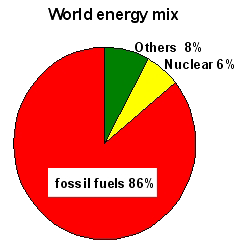 The U.S. Energy Information Administration (EIA) released a report September 19, 2011, which projects that world energy use will increase 53 percent from 2008 to 2035. The report says China and India will account for half of the projected increase.
Natural gas has the fastest growth rate among the fossil fuels over the 2008 to 2035 projection period. Petroleum and other liquid fuels will remain the largest global energy source with an increase of 26.9 million barrels per day. Global coal consumption will increase from 139 quadrillion Btu in 2008 to 209 quadrillion Btu in 2035. China will use a large chunk of that as they favor the cheaper form of energy derived from coal.
Renewable energy is projected to be the fastest growing source of primary energy over the next 25 years, but fossil fuels remain the dominant source of energy. Renewable energy consumption increases by 2.8 percent per year and the renewable share of total energy use increases from 10 percent in 2008 to 15 percent in 2035.