
Climate Change
The Impact of Global Warming on Polar Bears
Polar Bears
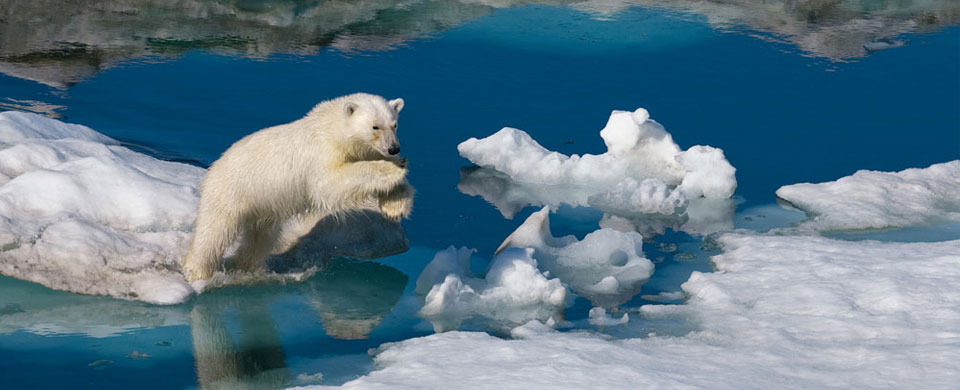
The chief threat to the polar bear is the loss of its sea ice habitat due to global warming. As suggested by its specific scientific name (Ursus maritimus), the polar bear is actually a marine mammal that spends far more time at sea than it does on land. It is on the Arctic ice that the polar bear makes its living, which is why global warming is such a serious threat to its well-being. As climate change melts sea ice, the U.S. Geological Survey projects that two thirds of polar bears will disappear by 2050. This dramatic decline in the polar bear is occurring in our lifetime, which is but a miniscule fraction of the time polar bears have roamed the vast Arctic seas.
Population Size Declines
In southern portions of their range, like Hudson Bay, Canada, there is no sea ice during the summer, and the polar bears must live on land until the Bay freezes in the fall, whereupon they can again hunt on the ice. While on land during the summer, these bears eat little or nothing.
In just 20 years the ice-free period in Hudson Bay has increased by an average of 20 days, cutting short polar bears' seal hunting season by nearly three weeks. The ice is freezing later in the fall, but it is the earlier spring ice melt that is especially difficult for the bears. They have a narrower timeframe in which to hunt during the critical season when seal pups are born. As a result, average bear weight has dropped by 15 percent, causing reproduction rates to decline. The Hudson Bay population is down more than 20 percent.
Retreating Sea Ice Platforms
The retreat of ice has implications beyond the obvious habitat loss. Remaining ice is farther from shore, making it less accessible. The larger gap of open water between the ice and land also contributes to rougher wave conditions, making the bears' swim from shore to sea ice more hazardous.
In 2004, biologists discovered four drowned polar bears in the Beaufort Sea, and suspect the actual number of drowned bears may have been considerably greater. Never before observed, biologists attributed the drowning to a combination of retreating ice and rougher seas.
Scarcity of Food
Exacerbating the problems of the loss of hunting areas, it is expected that the shrinking polar ice cap will also cause a decline in polar bears' prey -- seals. The reduction in ice platforms near productive areas for the fish that the seals eat affects their nutritional status and reproduction rates.
Polar bears are going hungry for longer periods of time, resulting in cannibalistic behavior. Although it has long been known polar bears will kill for dominance or kill cubs so they can breed with the female, outright predation for food was previously unobserved by biologists.