
Climate Change
Tree Rings as a Barometer of Global Warming
Measuring Past Climates
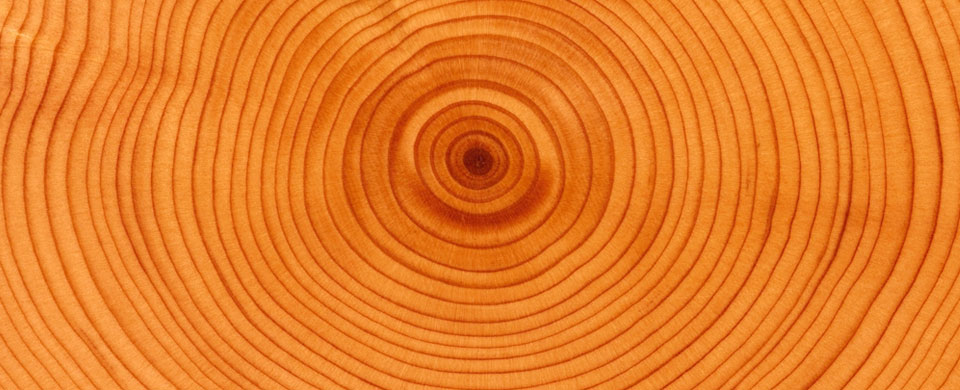
Tree rings are a good place to start thinking about how climate researchers get information about past climates. In certain cases, trees can live for many hundreds of years and in an extraordinary case, like the bristlecone pine, thousands of years! Each year trees add growth rings, which can indicate what sort of growing season the tree experienced. Interestingly these rings are more than a temperature indicator, they also tell the researcher about moisture and cloudiness as well.
Dendrochronology is the study of climate change as recorded by tree growth rings. Each year, trees add a layer of growth between the older wood and the bark. This layer, or ring as seen in cross section, can be wide, recording a wet season, or narrow, recording a dry growing season. Because the rings are basically recording a good growing season or a bad growing season, they are indirectly recording more than just moisture. They also document temperature and cloud cover as they impact tree growth as well. This record of annual summer information is very important when you consider that certain types of trees grow slowly over hundreds and hundreds of years, and therefore contain a record of as many years of climate and climate change.
There are limitations to this research though. Trees in the temperate zone only record the growing season, so the winter season, no matter how dramatic, will not be seen in the ring record. Interestingly, trees in tropical regions grow year round and therefore show no real obvious annual growth rings. Therefore climate data from equatorial areas is difficult to piece out and use. The record is limited geographically in another way too. Trees do not grow in all places on Earth, therefore we don't have a tree ring record of climate change for each region and ecologic niche globally.