
Climate Change
Global Warming and Hydroelectric Power
Hydroelectric Power: Pros and Cons
 Water is one of earth's richest resources. It not only helps in the growth of humans, plants and animals but it also helps generate electricity. One can say then that there is indeed power in water.
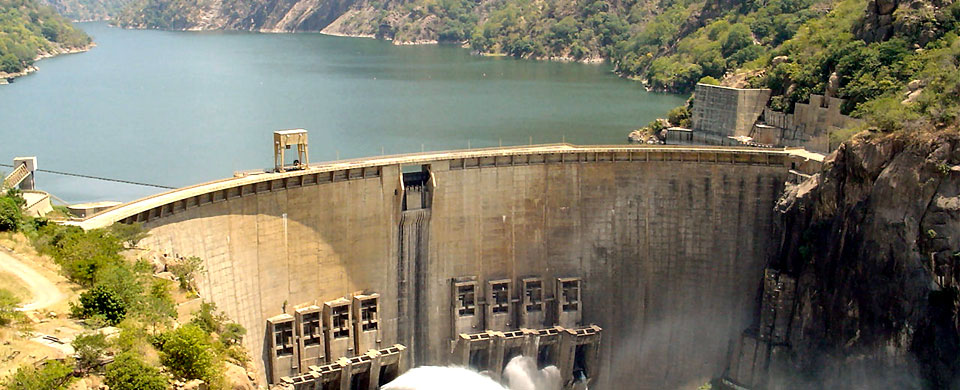
Hydroelectric energy refers to an alternative energy resulting from the hydrologic cycle of water. It is the force behind the generation of power through the use of falling water's gravitational force. The flow or fall of water determines the amount of available energy. It is important to understand that a big river with fast flowing water can provide a huge amount of energy in the same way that water that falls rapidly from a high position such as the water falls carries a great amount of energy.
Worldwide, hydropower is one of the commonly used forms of renewable energy and one of the oldest energy sources. Its major application is in generating electricity and its main benefit is that it produces no direct waste.
Pros
- After construction of the dam, electricity production can be constant.
- When electricity is not required, sluice gates can be closed, which stops production of electricity. The saved water can be used at other instances when demand of electricity is high. The storage of water in the lake means energy storage whenever needed.
- Dams last for many decades. Hence electricity can be generated for generations to come.
- The lake formation because of the dam can be utilized for water sports and other leisure activities. Large dams often become tourist destinations.
- The water of the lake can be utilized for purposes of irrigation.
- The electricity produced does not generate green house gases. That means no pollution to the environment.
- Water is a clean source of fuel.
- Hydropower depends on the water cycle, which in turn depends on the sun. In this sense, it is a renewable source of energy as long as it keeps raining in the catchment regions.
- Power generated through a hydroelectric power plant is available when needed. Water flow can be controlled by engineers with the help of the turbines.
Cons
- Construction of dams is extremely costly. In addition, high standards have to be maintained.
- In order for a dam to register profits, it would need to operate for several decades.
- Natural environment takes a back seat with the flooding of land areas.
- Individuals residing in surrounding valleys and villages need to evacuate the region. This may spell doom for their farms and means of livelihood. In some cases, individuals are forcibly evacuated so that these projects go ahead.
- The building of mammoth dams can result in significant damage to the geological system. For instance, construction of the Hoover dam has led to numerous earthquakes.
- Some dams have been poorly constructed. These dams fall apart over time. This can result in death and flooding.
- Some dams block the progress of a particular river in a specific country. This means that supply of water in the neighboring country is beyond one's control. This can lead to disputes among neighboring countries.