
Climate Change
Man's Contribution to Global Warming
Human Contribution
In it's latest report released in 2007 the Intergovernmental Panel on Climate Change (IPCC) used its strongest language yet to link human activity to Earth's warming temperatures, rising seas, more intense storms, and a host of other environmental maladies. "Fossil fuel use, agriculture, and land-use change are fundamentally affecting the systems on our planet," Achim Steiner, executive director of the United Nations Environment Programme, said. "Most of the observed increase in globally averaged temperature since the mid-20th century is very likely due to the observed increase in anthropogenic [human-caused] greenhouse gas concentrations," the report reads.
The phrase "very likely" translates to a 90 percent probability, the report's authors note. This is a significant departure from previous reports. In 2001 the panel concluded humans were "likely," or with 66 percent probability, the cause of global warming. The panel also released reports in 1995 and 1990.
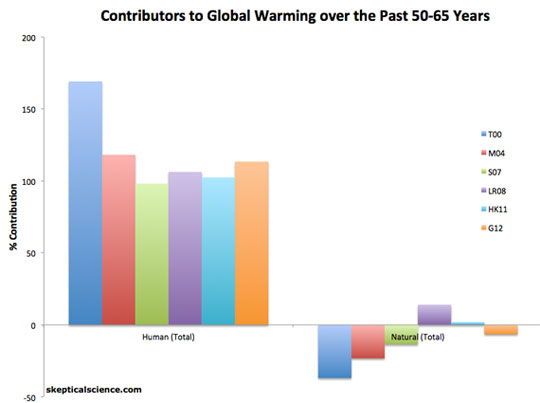
So how exactly are humans contributing to rising global temperatures? The three most significant ways are:
- Driving automobiles which burn tremendous amounts of fossil fuels. These fuels have been storing carbon for thousands, possibly millions of years. When they burn they instantly release this carbon in the form of carbon dioxide into the atmosphere.
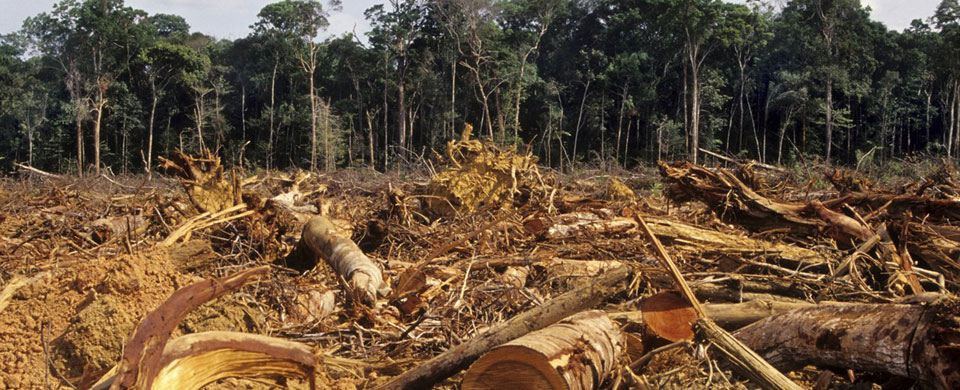
- Deforestation, which destroys plants that store carbon dioxide which they convert to oxygen. Deforestation could be on a massive scale such as the razing of forests along the Amazon basin, or smaller and more locally such as when a home is purchased which now occupies a lot where plants once lived.
- Eating commercial meat products which requires both the clearing of land for growing animal feed and the use of enormous fossil fuel-powered machines in the production, processing and transportation of this feed (as well as the meat). The animals' digestive tract produces methane, a major greenhouse gas. Animal agriculture is responsible for 18% of global greenhouse gas emissions.